
Latest posts
-
INTERVIEW: International Leadership and Cultural Adaptability

Alexander PetkovInternational Leadership and Cultural Adaptability The Unspoken Language of Leadership You have operated in high-context cultures like India and the Maldives, and arguably more direct cultures like Germany and the UK. Can you describe how leadership style has to be adapted to these variances, to avoid being misunderstood due to cultural nuance, and how
-
Strategic Acoustics: The Science of Cognitive Tuning at Work

Walk onto any modern corporate floor from London or Sydney and the visual aesthetic is often impeccable. We invest heavily in circadian lighting, ergonomic chairs, and advanced air filtration. Yet we leave our most vulnerable sensory channel entirely unprotected. High-frequency sounds from sudden digital notifications to sharp environmental noise actively stimulate the sympathetic nervous system,
-
The Elegance Dividend: The Influence of Beauty on Work

Walk into a master watchmaker’s workshop in Geneva. The environment immediately commands a quiet respect. The physical tools resting on the bench are beautiful. The lighting is deliberate and casts a soft glow over the intricate components. Knowledge work is equally a craft. Yet we rarely treat our modern corporate environments with the same reverence.
-
How Silent ‘Brainwriting’ Generates 42% More Original Ideas
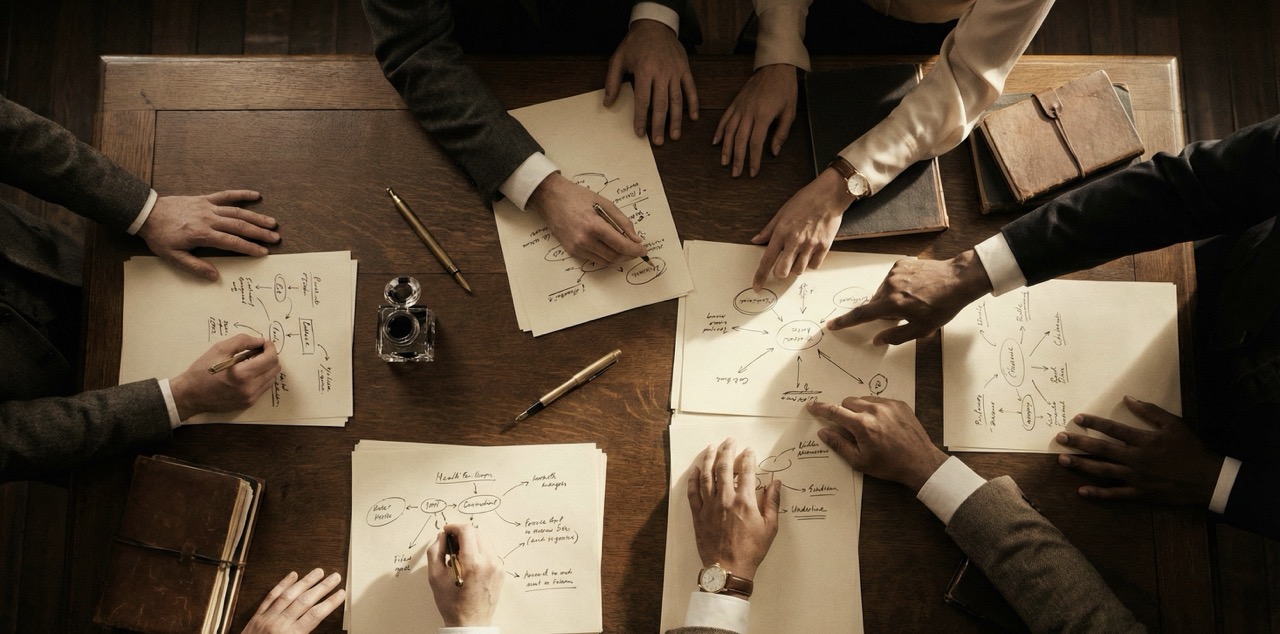
We spend vast resources acquiring diverse minds. We recruit for different backgrounds, cognitive styles, and observational depths. Then we place these carefully selected individuals into a room, present a complex problem, and ask them to shout out the answers. The deeply ingrained ritual of verbal brainstorming actively suppresses our best thinking. Why do we pay
-
The Architecture of Trust: Vulnerability as a Leadership Asset

A Shift in the Room Rain hits the glass of your top floor meeting room in Frankfurt. Your standard executive gathering is underway. The space is dominated by the hum of the climate control and the cool glow of quarterly projections. Defensive postures are the default setting. Then a subtle shift occurs. The managing director
-
The Economics of Levity: Why Serious Teams Need Humor

We’ve all been there – the glass-walled boardroom at 3:00 PM on a Thursday. The air in the room is stale, collars feel tight, and the faces around the table are entirely stoic. We have conditioned ourselves to believe that gravity equals productivity. A visibly stressed, rigidly serious team is widely perceived as a dedicated
-
Sustainable Performance: Enduring Excellence Beyond the Sprint

Delphine Tordjman is a multi-published author, executive coach for the likes of the Paris Olympics to Balenciaga, and leadership expert specializing in engagement and mental health at work. Author of Réussir sa carrière sans rater sa vie (Géreso, 2025), she helps leaders build sustainable performance aligned with meaning.Her approach integrates organizational psychology, somatic awareness, and
-
Employer Branding Beyond HR: Why Attraction is an Outcome, Not a Strategy.

Rassam YaghmaeiGroup Talent & Engagement Director, Free Have you ever changed your opinion after actually meeting someone? We all have. “Oh, I didn’t expect them to be like that,” “smarter than I thought,” or “less impressive than their reputation.” Organizations work the same way. Every day, candidates form opinions about companies they’ve never met. Through
-
The Narrative P&L: The Cost of Strategy Without Story

The deck lands on a Tuesday morning.Twenty slides. Clear KPIs. Blurry road ahead despite the roadmap. By the following week, three teams are pulling in three different directions. Meetings multiply. Decisions slow. Someone asks for “clarity” again. The strategy did not fail in the boardroom. It failed in recall. The myth we still believe Strategy,
-
The Importance of Friendships at Work, on Work

At 8:42 a.m., the lift doors open. Two colleagues step in, exchange a glance, then a small smile. Nothing dramatic. But the conversation that follows, about a shared dinner last night, softens the day before it has even begun. Modern organisations talk endlessly about alignment, engagement, performance. Yet many quietly design work as if relationships