Psychological safety at work is the shared belief that a team is safe to speak up, challenge ideas and take interpersonal risks without fear of embarrassment or reprisal. For HR leads, managers and leadership teams working across Norway, building this quality into the psychosocial work environment is one of the most practical steps available toward lasting team performance.
Signs of a strong psychosocial work environment
| What a strong psychosocial work environment looks like | Practices that build it | A facilitated format that helps |
|---|---|---|
| People ask questions and challenge ideas openly in meetings | Leaders invite dissent before decisions are made | Structured dialogue and listening practice |
| Mistakes are discussed and learned from, not buried | Team retrospectives with clear, agreed norms | Improvisation exercises that build the reflex of speaking up |
| Feedback moves in all directions across the team | Managers request honest input and act on it visibly | Structured feedback rounds in a facilitated session |
| Fresh ideas reach leadership from every level | Regular, genuine listening rounds by senior leaders | Storytelling and scenario work |
| People feel respected and included regardless of role or seniority | Consistent behavioural recognition of contributions at all levels | Leader sessions on psychological climate and trust |
What is psychological safety at work?
The concept was defined and researched by Amy Edmondson at Harvard Business School and is described in the Harvard Business Review as the belief that one will not be punished or humiliated for speaking up with ideas, questions, concerns or mistakes. Teams that score high on psychological safety learn faster, surface problems earlier and produce more creative solutions. Crucially, it is not about removing all friction from working life or making every meeting feel comfortable. It is about creating the conditions in which people feel secure enough to take the interpersonal risks that genuine collaboration requires: raising an unpopular view, flagging a flaw in a plan before it is too late, or admitting uncertainty rather than projecting false confidence. The concept travels particularly well into Norwegian working life, where direct communication and a relatively flat hierarchy already provide a strong base to build from.
How does psychological safety relate to arbeidsmiljø?
The Norwegian Working Environment Act (Arbeidsmiljøloven) places clear obligations on employers. Chapter 4 sets out requirements for the working environment, and section 4-3 addresses the psychosocial work environment (psykososialt arbeidsmiljø) directly: work is to be arranged to preserve employees’ integrity and dignity, efforts are to be made to enable contact and communication between colleagues, and employees are not to be subjected to harassment or other misconduct. Employers must carry out systematic health, safety and environment work (HMS-arbeid), which includes assessing psychosocial risk factors across the organisation. The verneombud (safety representative) and the working environment committee (arbeidsmiljøutvalg, AMU) each hold formal roles in this process and are important partners in any sustained effort to improve team climate. Psychological safety comes from organisational research, and it sits naturally within this work: teams where people speak up, ask for help and communicate openly are living the spirit of a good arbeidsmiljø. Arbeidstilsynet, the Norwegian Labour Inspection Authority, publishes accessible guidance on the psychosocial working environment for employers wanting a grounded starting point.
What can leaders do to build psychological safety?
The most effective moves are small and consistent. A single gesture, repeated across every team meeting, accumulates into a team norm far faster than a one-off programme. The following practices are drawn from the research and from what experienced facilitators observe working well with leadership teams across Norway:
- Ask a genuine question before offering a view in team meetings
- Respond to a mistake with curiosity: “what can we learn from this?” is a powerful reset that changes the climate over time
- Name and credit the person who raised an uncomfortable truth
- Invite explicit dissent before a decision is finalised, and mean it
- Close every conversation about a concern with a concrete, visible next step
- Keep your own commitments visibly so trust accumulates steadily across the team
These habits become easier once leaders have practised them in a low-stakes setting. Leadership development sessions designed to include honest reflection and behavioural rehearsal accelerate the shift from good intention to consistent daily practice.
What happens in a psychological safety workshop?
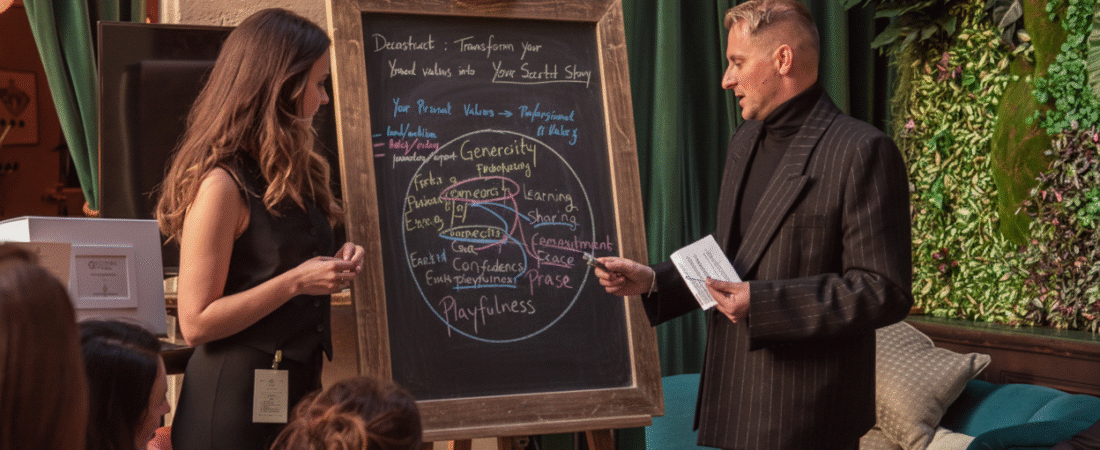
A psychological safety workshop is a facilitated team session, typically a half-day or full day, designed to let participants practise, in the room, the norms they want to build. A skilled facilitator guides the group through listening and feedback practice, structured dialogue, storytelling exercises and improvisation-based work that builds the reflex of speaking up without lengthy preparation. Leader-specific sessions focus on the climate signals that managers send, often without realising it. Culture Vitale brings an experienced facilitator to your chosen venue across Norway, whether that is an Oslo boardroom, a host’s studio or a setting alongside the Oslofjord that makes the day genuinely memorable. For a closer look at how a session unfolds, the psychological safety workshop activities guide walks through formats and sequences in detail. Facilitated sessions support communication norms, trust and team culture; they complement, and never replace, the employer’s systematic HMS work, risk assessment or clinical care.
How do we know it is improving?
Psychological safety is visible in everyday behaviour: who speaks up in meetings, whether people surface problems before they compound, how disagreements are handled, and whether ideas from across the team reach the people who can act on them. A simple before-and-after read on energy, focus and openness gives teams a clear, shared signal of movement without the overhead of a formal process. Many teams use a short self-report measure before a facilitated session and revisit it at a team meeting some weeks later, making progress concrete and reinforcing the new norms at the same time. The verneombud and AMU can integrate this kind of team-level evidence into the broader systematic HMS review, giving the whole organisation a fuller picture of where psychosocial conditions are strengthening and where to direct attention next.
Plan a session
Tell us your goal, group size and timing and we will curate a session that fits your team precisely; or explore our experts and sessions and choose for yourself, starting with psychological safety workshops in Norway.
References
- Harvard Business Review, what is psychological safety: hbr.org
- Norwegian Working Environment Act, English translation: lovdata.no
- Arbeidstilsynet, psykososialt arbeidsmiljø: arbeidstilsynet.no