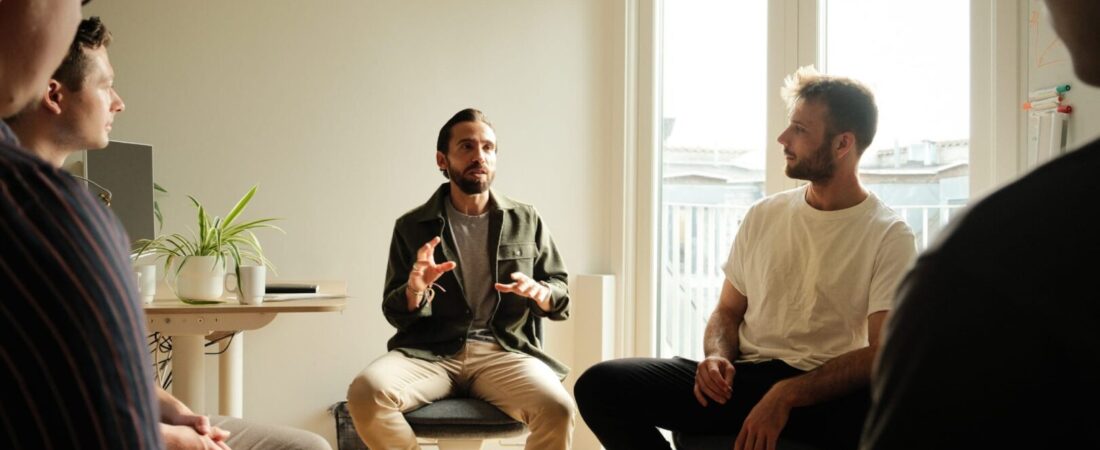
The best offsite for bringing two teams together after a merger runs in two steps: leaders align first, then the joined team spends a day building shared ways of working, trust and a first joint commitment. Hands-on shared experiences, from making to music, build that trust faster than another presentation.
Whether the change is a merger, an acquisition, a restructure or a reorganisation, the opening weeks decide how the new team feels about itself. Facilitated team cohesion workshops give two groups a common experience to stand on, and the agenda below shows how a day can be shaped around one.
Integration formats by duration
| Format | Best for | What the team leaves with |
|---|---|---|
| 90-minute integration session | Two teams who share an office or a calendar and need a strong first meeting | Names, faces, a first shared experience and one agreed working habit |
| Half day | A joined team of 15 to 60 people finding its footing | A short ways-of-working agreement and a map of who does what |
| Full day | Teams that will work side by side from now on | A team charter draft and a first joint commitment |
| Two days | Larger or multi-site teams, and groups with several workstreams to merge | Charter, working groups and a 90-day plan owned by the team |
| Leadership half day | The leaders of both sides, before the wider team meets | One story, one set of priorities and clear roles in the room |
| Follow-up session of 60 minutes | A few weeks into working together | A refreshed charter and the next small step |
Leaders first, then the joined team
The sequence matters. When leaders from both sides have already agreed what they are building, the joined team walks into the room to a consistent story. A half day for the leadership group, shaped by leadership offsite facilitation, settles priorities, roles and the three messages every leader will repeat. The wider session then belongs to everyone.
The Harvard Business Review research on teamwork points to the same foundations: a compelling direction, a strong structure, a supportive context and a shared mindset. A leadership session builds the first three. The joined-team day builds the fourth.
An example full-day agenda
This example day suits two teams of 20 to 60 people and a venue away from either office.
| Time | Activity | Purpose |
|---|---|---|
| 09:00 | Arrival and a mixed-table welcome | People sit beside new colleagues from the first minute |
| 09:30 | Leaders open with one shared story | A consistent account of why and what comes next |
| 10:00 | Facilitated making, music or movement session | Mixed groups create something together and relax into each other |
| 11:30 | Storytelling in pairs: how I work best | Strengths, habits and preferences become visible |
| 12:30 | Long shared lunch | Open conversation, free of agenda |
| 13:30 | Who does what: mapping work across both teams | Clear ownership and the handoffs that matter |
| 15:00 | Ways-of-working workshop | Meeting rhythm, decision rights and communication norms agreed together |
| 16:15 | First joint commitment | One visible action the whole team will deliver together |
| 17:00 | Close and a short reflection | People leave with energy and a shared next step |
Why shared experiences build trust quickly
A presentation gives people information. A shared experience gives them a story they made together. When colleagues from two organisations build, play, sing or tell stories in mixed groups, loyalties to the old team soften into curiosity about the new one. Teams often choose a drumming session, collaborative art or storytelling workshops, among many other formats. Each one lets people see each other at their best before the first difficult meeting.
Harvard Business Review describes the pull of “us versus them” thinking in new teams and recommends building a common identity through shared, unstructured time. A well-led creative session is that time, given a purpose and a facilitator. The same research on high-performing teams highlights psychological safety, the confidence that it is safe to speak up and take a moderate risk, and a shared creative task is a quick way to build it.
Meeting the reality in the room
People arrive with real questions. Some feel uncertain about their role, some feel loyal to a team that has changed shape, and almost everyone is carrying a heavier workload than usual. A good agenda treats these as the starting conditions of the day. It gives people time to talk, a facilitator who can hold a mixed room, and tasks that are enjoyable enough to bring energy back. Change resilience training adds practical tools for steadiness through transition. Wellbeing in these sessions means better communication, clearer norms, and a healthier balance of pressure and recovery, a practical layer alongside the support your organisation already provides.
What the team takes away
A strong integration day ends with outputs people can point to the following Monday.
- A shared ways-of-working agreement covering meetings, decisions and communication
- A team charter draft that every member has helped to word
- A map of who does what across both teams
- A first joint commitment with a named owner
- A set of working relationships that already exist across the old divide
What makes the day land well
- Leaders align on the story before the wider team arrives
- Mixed tables and mixed groups from the first minute
- A neutral venue that belongs equally to both teams
- One shared experience of making, music, movement or storytelling in the morning, when energy is highest
- Working sessions after lunch, with real decisions to make
- A facilitator who is comfortable holding both groups at once
- A short follow-up session that keeps the charter alive
- A team away day format with room to think and room to laugh
How long should a merger offsite be?
A half day suits teams who will keep working in the same building, and a full day gives space for a charter and a first joint commitment. Larger or multi-site groups often choose two days so working groups can form. A 90-minute integration session works well as a first meeting or as a follow-up.
Who should attend a team integration workshop?
Invite the whole joined team, because shared experience needs everyone in it. Leaders from both sides attend the leadership half day first, then join the wider session as participants, which signals that integration is a shared effort.
Can a team integration offsite work across cities or countries?
Yes. A neutral city that both groups can reach gives everyone the same fresh start, and Culture Vitale curates experts from more than 50 countries, many open to travelling and delivering in French, Spanish, German, Italian, Portuguese, Dutch, Arabic and other languages, at the venue you choose. Hybrid and multi-site teams often use a shared opening experience and then break into working groups.
What happens after the offsite?
The charter and the first joint commitment carry the momentum forward. A follow-up session a few weeks later gives the team a chance to refine its agreements and celebrate progress. The guide to onboarding workshops for new teams and the team cohesion workshops guide add more formats for each stage.
Plan a session
Tell us your goal, group size and timing and we will curate the right session for your team integration day, or explore our experts and sessions and choose for yourself.