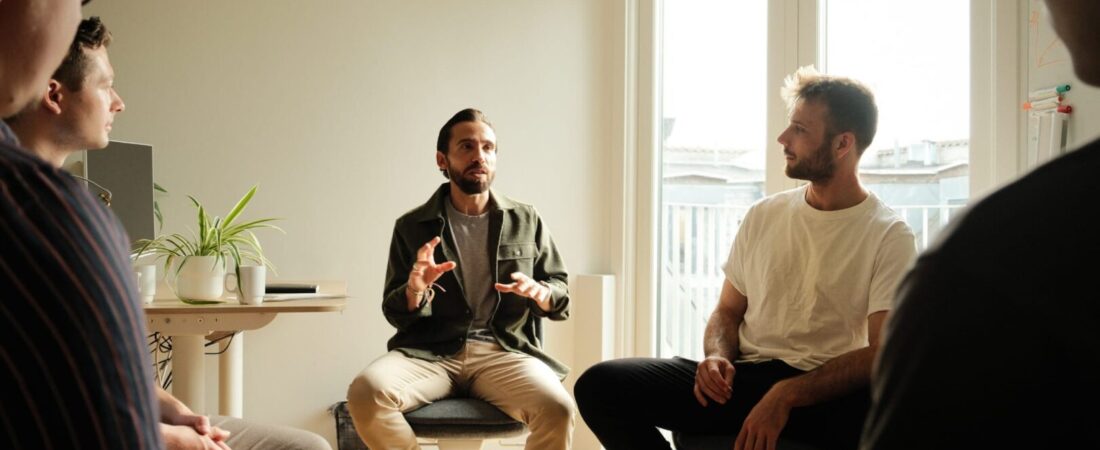
To choose a leadership development programme in Saudi Arabia, begin with the leadership capability the business needs next, then match the format, participant level, language, delivery setting, and follow-through. A strong programme combines relevant practice with facilitated reflection and a way to observe transfer at work. Culture Vitale can curate a Saudi brief around your organisation’s priorities and leadership population.
Leadership development programmes in Saudi Arabia compared
| Business need | Best-fit format | Participants | Useful duration | Core outcome |
|---|---|---|---|---|
| Prepare emerging leaders | Cohort programme with applied projects | Future and first-line leaders | Several weeks with practice between modules | Confidence, judgement, team leadership |
| Align a senior team | Leadership offsite and strategic facilitation | Executive or functional leadership team | Half to full day, with follow-up | Shared priorities and decisions |
| Strengthen managers | Manager development workshop series | People managers | One to four sessions | Feedback, delegation, communication |
| Build a specific capability | Focused workshop or practice lab | Selected leaders | Half to two days | Transferable skill and shared language |
| Support an individual transition | Executive coaching alongside team learning | One leader or a small group | Several conversations over time | Self-awareness, action, accountability |
What is a leadership development programme?
A leadership development programme is a structured learning journey that helps a defined group build the judgement, behaviours, and relationships required to lead well in its context. It may include workshops, practice, peer learning, reflection, coaching, applied projects, and sponsor involvement. The right design is shaped by the organisation’s operating reality rather than a generic list of leadership topics.
Leadership development is strongest when learning continues into the workplace. Gallup’s manager-development guidance describes effective development as a repeatable process that builds habits, conversations, and practices over time. Its manager development guide reinforces the value of practice, coaching and sustained behaviour change.
For a private organisation, the programme may be tailored to national capability priorities, a transformation, a new management layer, succession, cross-functional collaboration, or a leadership team preparing for growth. The design should make that priority visible in practice.
How to choose a leadership development programme in Saudi Arabia
1. Start with the leadership moment
Describe the situation leaders must handle better after the programme. It might be leading through change, setting direction across functions, giving clear feedback, developing Saudi talent, managing complexity, or building trust across a growing organisation. A specific leadership moment produces a more useful design than a broad request for “leadership training”.
2. Define the participant group
Emerging leaders, first-line managers, experienced heads of function, and executive teams need different levels of challenge. Consider reporting lines, shared business context, experience, language preference, and the relationships participants need to strengthen. A cohort with a common challenge can learn quickly from peer experience, while a senior team may need confidential facilitation around live decisions.
3. Match the learning architecture to the outcome
Use a workshop when the priority is a shared capability or vocabulary. Use a programme when participants need repeated practice, peer learning, and application between sessions. Use an offsite when the leadership team needs protected time to align and decide. Add coaching when individual behaviour change or transition support will deepen the group work.
4. Build practice into the design
Leadership is learned through decisions, conversations, and consequences. The programme should include realistic cases, simulations, feedback, reflection, and an applied project or workplace experiment. Participants should leave each module knowing what they will practise, with whom, and how they will recognise progress.
5. Agree how progress will be observed
Measurement can be simple and still meaningful. Define the leadership behaviours that matter, gather a baseline through a pulse or structured reflection, and revisit the behaviours after participants have had time to apply them. Useful evidence can include quality of delegation, clarity of priorities, feedback habits, stakeholder alignment, and progress on the applied work.
Example leadership programme pathway
| Stage | Focus | Participant experience | Output |
|---|---|---|---|
| Brief and discovery | Business context and leadership outcomes | Stakeholder conversations and participant input | Capability priorities and success measures |
| Opening module | Leadership identity and shared language | Facilitated learning and self-reflection | Individual practice intention |
| Applied practice | Real conversations and decisions | Workplace experiment with peer support | Evidence from a live leadership situation |
| Development module | Capability chosen for the business | Cases, simulations, and feedback | Personal and team action plan |
| Integration | Transfer and next-stage support | Reflection, sponsor discussion, and commitments | Follow-up measures and ownership |
What excellent leadership development feels like
- Business-connected: every topic links to a decision, relationship, or leadership responsibility the participants recognise.
- Practised in the room: participants test the behaviour, receive feedback, and try again.
- Appropriately challenging: the facilitator creates candour with care and keeps the group focused on growth.
Frequently asked questions
What should a leadership development programme in Saudi Arabia include?
It should include a clear business purpose, a defined participant group, relevant leadership capabilities, practical application, facilitated reflection, and a way to observe transfer. Depending on the goal, it may combine workshops, peer learning, applied projects, an offsite, and coaching. The design should feel relevant to the organisation’s workforce and operating context.
How long should a leadership development programme last?
There is no single ideal duration. A focused workshop can establish shared language, while a multi-week programme gives people time to practise. The right duration follows the behaviour to be developed and the time participants need to apply it.
What is the difference between leadership training and leadership development?
Leadership training usually focuses on a defined skill or body of knowledge. Leadership development is a broader journey that may include training, practice, reflection, relationships, coaching, and workplace application. A well-designed programme can use training as one component within a longer development arc.
Should a programme be delivered in English or Arabic?
The best language lets participants think precisely, discuss candidly, and apply the learning confidently. Some organisations use one language throughout and others combine languages across materials, facilitation, or discussion.
Can a leadership programme support Saudi national talent development?
Yes. The participant profile, applied work, sponsorship, and progression pathway can be designed around the organisation’s talent priorities. A coherent pathway can connect emerging-leader development, manager practice, executive sponsorship and opportunities to apply learning in live business work.
How do we measure a leadership development programme?
Start with two or three observable behaviours linked to the business goal. Use a baseline reflection, participant commitments, and a follow-up pulse after application.
When should coaching be included?
Coaching is useful when participants need individual reflection, support through a transition, or accountability for a specific behaviour. It can sit alongside a cohort programme or follow an intensive module. The choice depends on whether the primary need is shared capability, individual change, or both.
How can a leadership programme fit an executive offsite?
An offsite can open with shared practice, move into live strategic questions, and close with decisions and commitments. Culture Vitale’s leadership offsite facilitation can support that integrated format.
How Culture Vitale approaches leadership development
Culture Vitale brings together a curated network of experienced facilitators across leadership, communication, culture, creativity, wellbeing, and executive development. The brief begins with the organisation’s objective, participant group, setting, language, and desired change, then shapes a considered experience around those details.
The result may be a focused leadership development workshop, a multi-stage programme, a facilitated Riyadh offsite, or a blend of formats. Bespoke design, expert facilitation, and optional impact measurement keep the work both human and accountable.
Plan a leadership programme
Share your leadership objective, participant group, language, timing, and delivery setting and we will curate a Saudi programme around it, or explore leadership development and executive coaching in Riyadh and choose the route that fits your organisation.
References
- Gallup, manager development strategy: gallup.com
- World Health Organization, mental health at work: who.int