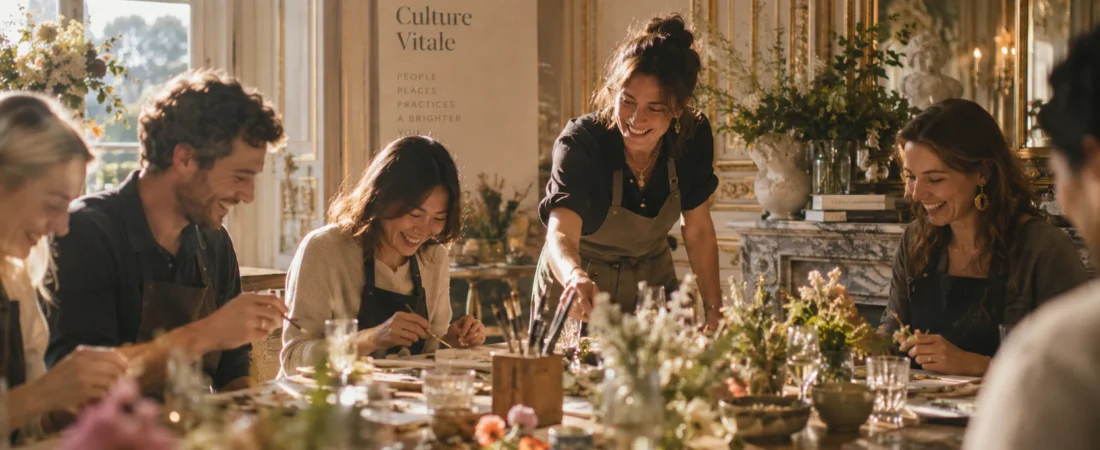
The best team building activities in Oslo are chosen by the outcome you need and the season you are in. From candlelit craft workshops in winter to fjord-side sessions under long summer light, Oslo’s range of hands-on, screen-free formats lets companies build genuine connection, sharper communication or creative energy into a single half-day.
Activity formats at a glance
| Activity family | Best outcome | Group size | Setting | Season | What makes it land |
|---|---|---|---|---|---|
| Candle making and scent blending | Connection, calm | 8 to 40 | Indoor | Year-round; ideal in winter | Shared sensory focus lowers guard and opens genuine conversation |
| Chocolate or cooking masterclass | Energy, collaboration | 10 to 60 | Indoor | Year-round | Everyone contributes; edible results lift the mood instantly |
| Drawing, painting or ceramic craft | Creativity, psychological safety | 8 to 30 | Indoor, studio or office | Year-round; strong in autumn and winter | No-judgement making levels hierarchy and builds trust quickly |
| Improvisation and storytelling | Communication, confidence | 10 to 50 | Indoor | Year-round | Fast, physical and genuinely funny; people surprise themselves |
| Rhythm and music | Energy, group cohesion | 12 to 80 | Indoor | Year-round; ideal for kick-offs | Synchrony creates felt unity faster than any icebreaker |
| Friluftsliv (outdoor life) session | Energy, perspective, connection | 8 to 40 | Outdoor | Late spring to early autumn | Moving together in Nordmarka or by the Oslofjord resets the room dynamic |
| Wine or sensory tasting | Connection, conversation | 8 to 40 | Indoor | Year-round; elegant in winter | Guided tasting gives structure to social time and deepens shared experience |
Choose by the outcome you want, not just by the activity
Oslo companies often default to the activity that comes first to mind. The teams that leave genuinely changed start from a different question: what do we want to feel or do differently by the end of the day? Connection is the right goal after remote or hybrid stretches when the team has drifted. Communication formats suit moments when a new project structure has created friction between people who need to work closely together. Creativity sessions fit launch periods, when fresh thinking matters more than consolidation. Energy formats, whether rhythm-based or outdoors in the friluftsliv tradition, come into their own in the low-light winter months or after a sustained deadline push when the team simply needs to breathe again. Matching format to goal is the single most reliable way to make a session feel purposeful, and it is the principle that shapes every Culture Vitale programme.
Indoor team building: craft, food and creative sessions
Oslo’s indoor team building options cover every sensory register. A candle making and scent blending session gives each person a decision-making task and a beautiful object at the end; the intimacy of the materials, wax, fragrance notes and natural botanicals, creates easy, unhurried conversation. Collaborative art workshops, from painting and ceramic work to glass decoration, operate on the same principle: when hands are busy, minds relax and colleagues reveal sides of themselves that the meeting room tends to conceal. Cooking masterclasses and chocolate rituals shift the energy upward, competitive without pressure, and they close with something the whole team shares. Improvisation and storytelling sessions go further still, training real communication skills through play and movement. Wine and sensory tastings bring structure to social time, turning informal into intentional. All of these formats work in a Grünerløkka studio, a Frogner meeting space or at the company’s own offices.
Outdoor team building: friluftsliv and the long evenings
Friluftsliv (outdoor life) is how many people here restore themselves and spend time together. From late spring through to early autumn, Oslo’s geography makes outdoor team building genuinely compelling. Nordmarka forest begins at the end of the T-bane line. The Oslofjord offers islands, shoreline paths and water-level perspectives that dissolve hierarchy quickly. Walking conversations, facilitated dialogue on a forest trail, outdoor mindfulness by the water and gentle physical challenges all sit comfortably within the Norwegian arbeidsmiljø (work environment) culture that values the whole person. Seasonal wreath making and floral workshops bring the outdoor palette indoors in autumn, bridging the shift from long evenings back to candlelight and craft. For teams with a julebord (the company Christmas gathering) on the horizon, a late-autumn outdoor session followed by a warm evening inside is a natural and satisfying progression, explored further in the guide to julebord ideas for companies in Oslo.
An example half-day for a team of 20
The group arrives at a central Oslo venue at 09:30. Thirty minutes of facilitated arrival, introductions where helpful, and a shared brief on the session theme. From 10:00, the core activity runs for 90 minutes: a scent and candle workshop with tables arranged so that people who do not usually work together sit alongside each other, guided by an experienced facilitator throughout. At 11:30, the group reconvenes for a short reflection round, ten minutes of open conversation about what the session surfaced. Lunch follows at noon, informal and unhurried. The afternoon, from 13:00 to 14:30, brings a second format, an improvisation or storytelling exercise, to shift the energy and consolidate the morning’s openness. The day closes at 15:00. This shape, two complementary formats across a half-day with a genuine break, consistently produces more lasting results than a single marathon activity. Team cohesion workshops are structured around exactly this principle of complementary sequencing.
What makes any session work well
- A clear outcome agreed before booking and shared with the facilitator in advance
- Group size matched to the format: most craft and connection sessions are at their best between ten and thirty people
- No screens, no laptops: the physical and sensory engagement is precisely what creates the shift
- A facilitator who briefs the team manager beforehand on how to hold the energy and pace the day
- A brief reflection moment built in, even ten minutes, to let the team name what they noticed
- Honest seasonal planning: a candlelit craft evening in January is inspired; the same format outdoors in Nordmarka belongs to June
What are the best team building activities in Oslo?
The best team building activities in Oslo are the ones chosen for the outcome the team needs, not for novelty alone. Hands-on, screen-free formats consistently produce more lasting change than passive experiences: craft and making sessions, culinary workshops, improvisation and storytelling, and outdoor friluftsliv formats all create the conditions for genuine interaction and trust. Research from Google on team effectiveness confirms that what distinguishes high-performing teams is less individual talent and more the quality of how people relate to one another, which is exactly what well-designed experiential formats are built to strengthen.
What indoor team building works in winter?
Winter is Oslo’s season for warmth, candlelight and craft, and the short days make indoor sensory formats feel natural and inviting. Candle and scent blending, ceramic and glass work, chocolate masterclasses, wine tastings and jewellery or leather craft all thrive in the low-light months. Improvisation workshops bring energy and laughter when daylight is scarce. The most effective winter sessions embrace the season rather than resist it, using it to create a deliberately intimate atmosphere that long summer evenings dissolve naturally outdoors.
How long should a team building session be?
A single focused activity of 90 minutes to two hours produces a clear and noticeable shift. A half-day of three to four hours, with two complementary formats and a genuine break, produces something more durable: people arrive as colleagues and leave with a shared reference point they will mention for months. Full-day sessions work well for kick-offs (kick-off) and planleggingsdager (planning days), where team building sits alongside a broader programme agenda. For most teams, the half-day format offers the most practical balance of depth and working-day impact.
Can team building run at our office?
Yes. Most formats are designed to work in a company’s own space, whether that is a meeting room cleared of furniture, a boardroom reconfigured with workshop tables or an open-plan floor with room for movement. The facilitator and all materials arrive ready to go; there is nothing to set up and nothing to clear away. For formats that benefit from a change of environment, a host’s studio, a waterfront space or an island venue on Bygdøy can suit the session well.
How do we make an activity work for mixed energy levels and introverts?
The most reliable answer is to choose a making or sensory format. When hands are occupied, participation does not depend on performing enthusiasm, and quieter team members contribute fully through the quality of their attention and their work. Improvisation sessions, facilitated well, let introverts observe briefly before joining; skilled facilitators draw people out rather than single them out. Pairing people intentionally, so that the more vocal do not automatically lead, and building quiet reflection moments alongside group discussion, keeps the experience genuinely balanced across different working styles and temperaments.
Plan a session
Tell us your outcome, group size and preferred timing and we will curate a programme for you, or explore our experts and sessions and choose for yourself. Start with team building in Oslo.
References
- Google re:Work, understanding team effectiveness: rework.withgoogle.com
- Gallup, State of the Global Workplace: gallup.com